Lost Lands 2
- 4.8
- Rating
- 5.00M
- Installs
- Free
- Price

 Analysis by App-foxy
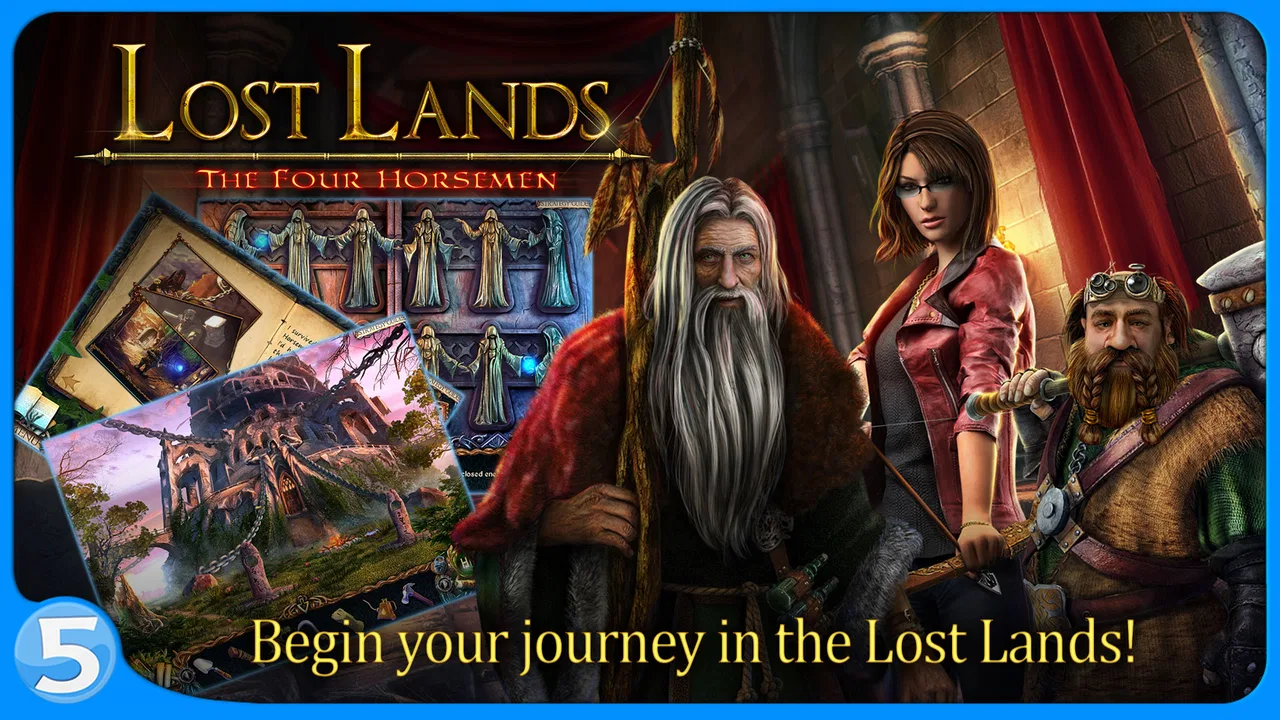
Lost Lands 2 is the kind of adventure game I reach for when I want a story, puzzles, and a little mystery without the pressure of a fast action game. I played it as a mobile point-and-click adventure, following a young girl whose fight against the Four Horsemen leads through a fantasy world filled with strange locations, objects, and clues. My first impression was that it is much closer to an interactive illustrated mystery than to a conventional combat-focused adventure.
That distinction matters. The game is free to start, aimed at Everyone, and made by FIVE-BN GAMES, but it still expects patience and close attention. Its appeal comes from examining scenes, collecting useful items, combining ideas, and working out what the game wants from you. If you enjoy taking your time and feeling clever after solving a puzzle, there is a lot to like here. If you prefer immediate action, simple objectives, or constant guidance, the experience can feel slow.
What interested me most was how the game handles different abilities and playing situations. The absence of reflex-heavy combat makes it more approachable for people who find rapid controls difficult, while the visual investigation and puzzle structure create their own barriers. In my experience, Lost Lands 2 is at its best when I can play somewhere quiet, with the screen close enough to inspect carefully and enough time to think.
You May Also Like

 Blood Strike: 2.5 Anniversary
Blood Strike’s Loadouts Turn Every Drop Into a Tactical Gamble
A close look at Blood Strike’s custom loadouts: how fast access to signature weapons reshapes its battle royale rhythm, rewards preparation, and narrows the gap between fights.

 Pandora - Music & Podcasts
Pandora’s Music Is Easy to Start, but Harder to Recover
Pandora’s strength is its low-effort path from a seed to a station. Its weak spot is how much confidence it asks you to place in connection, setup, and quiet recovery.

 8 Ball Pool
 Is Built on Rivalries, Rematches, and Routine
A close look at the rivalries, rematches, shared routines, and unanswered safety questions that turn a quick pool match into a persistent mobile community.

 Samsung Music
’s Quiet Strength Is Playing What You Already Own
Its reach comes less from spectacle than from dependable access to a personal library. That simplicity is both the app’s strongest retention engine and its ceiling.

 AccuWeather: Weather Radar
AccuWeather Review: A Quick, Clear Forecast for Everyday Decisions
For everyday plans, the best forecast is the one you can understand quickly. AccuWeather makes rain timing, radar, and local conditions easy to act on, with a few trade-offs.

 Hill Climb Racing
Why Hill Climb Racing Still Turns Crashes Into One More Run
A tiny car, a bumpy hill and one more upgrade: Hill Climb Racing keeps resurfacing because its simple chaos makes every near-miss feel personal.
More From Our News Desk



How clearly the game presents its world and puzzles
I focus here on how the game makes its fantasy world and puzzles understandable through scenes you can inspect at your own pace. That visual approach keeps the controls approachable, but it also means a missed detail can matter; next, I look at how a steady search routine helps turn exploration into useful progress.
Readability and navigation
The central interaction is visual: I look at a scene, identify anything that seems important, tap objects, and decide how each discovery connects to the wider problem. This gives the game a calm rhythm. I am not racing across a map or trying to memorize complicated button combinations. Instead, I move forward by paying attention to small details and remembering where an item might be useful.
That structure is friendly to players who prefer deliberate navigation. A tap is generally more manageable than a virtual joystick, especially when I am playing with one hand or when precise movement is uncomfortable. The story also gives each location a clear purpose, so exploration feels more like investigating a series of illustrated sets than wandering through a huge open world.
There is a trade-off, though. Visual adventure games depend heavily on noticing the correct object. A useful item can blend into the background, and the game does not always make the intended next step obvious. I sometimes had to revisit earlier areas simply because I had overlooked a small interactive detail. That is not necessarily poor design; it is part of the genre. Still, it means that players with reduced visual acuity may need more time, a larger screen, or a different game altogether.
I found it helpful to adopt a consistent search pattern. Rather than tapping randomly, I scanned each scene from left to right and then checked the edges, corners, and unusually placed objects. I also tried to remember every item I picked up instead of immediately using it. That simple habit reduced the feeling of being stuck and made the puzzles feel more logical.
The interface is easier to understand than the story’s fantasy setting. I did not need to learn a large control system before beginning. The challenge comes from interpreting clues, not from remembering which button performs which action. For someone new to mobile adventure games, that is a meaningful advantage. The game asks for observation and reasoning rather than technical gaming experience.
Story clarity and cognitive load
The premise gives the investigation a strong direction: a young girl is trying to confront the Four Horsemen. The fantasy setting adds unusual characters and locations, but the basic emotional goal remains easy to follow. I always understood that my discoveries were connected to a larger rescue and confrontation rather than being random puzzle exercises.
At the same time, the game can ask me to hold several things in mind at once. A location may contain an object that seems irrelevant until much later, while a clue from one area can explain a mechanism somewhere else. Players who enjoy mental mapping will appreciate that design. Players who have memory difficulties may find it tiring, especially during longer sessions.
My practical advice is to keep a short note on paper or on another device. I wrote down unusual symbols, locked objects, and items whose purpose was not yet clear. This was more useful than taking screenshots because it turned vague observations into a simple checklist. It also prevented repeated backtracking, which is one of the main sources of frustration in this type of game.
The story is a better fit for readers who enjoy atmosphere than for people seeking deep dialogue choices. I played it for the feeling of uncovering a strange world and solving its problems, not for branching role-playing decisions. That makes the experience more focused, but it also means players wanting character customization or a highly reactive narrative should look elsewhere.
Visual searching and puzzle fairness
The strongest puzzles are the ones where an object’s use becomes clear after I understand the situation. I enjoyed the moment when a previously confusing item suddenly made sense. Those discoveries reward careful observation rather than random tapping, and they give the adventure its satisfying sense of progress.
The weaker moments are the ones where several objects appear equally important. Without a clear visual hierarchy, I could spend time inspecting decorative details that have no practical role. This is a common friction point in hidden-object-style adventures, and it affects players differently. A patient player may enjoy the search; someone with limited concentration may experience it as visual clutter.
I recommend playing with the device held steadily rather than while walking or travelling. The game does not demand speed, so there is no reason to rush. A stable position makes it easier to inspect scenes, compare objects, and notice small details. That is a modest change, but it noticeably improved my accuracy.
Motor and sensory considerations
From a motor perspective, the game is gentler than action adventures. I did not need rapid swipes, repeated button presses, or precise timing to make progress. The tap-based interaction can suit players who find fast games uncomfortable or who prefer to use one finger. It is also easier to pause mentally between actions because the game is built around decisions rather than reflexes.
That does not make it effortless for every player. Some objects require careful tapping, and repeated searching can become awkward if a player has difficulty with fine motor control. A larger device may help because it gives the finger a bigger visual target, although the experience is still fundamentally dependent on touch interaction. Anyone who needs switch access, voice control, or a specialized input method should test whether their device’s own tools work comfortably with the game before committing to a long session.
The sensory experience is comparatively restrained. Lost Lands 2 is not built around constant explosions or rapid visual changes, which makes it less overwhelming than many action games. Its slower pace also lets me stop after a puzzle and return later without losing the entire flow. For players sensitive to fast motion or intense action, that calm structure may be a real benefit.
However, the game still communicates through visual scenes, object placement, and written story information. A player who cannot comfortably distinguish small details may miss essential clues. Likewise, anyone who relies primarily on audio description should not assume that the visual investigation will translate fully. The game’s core challenge is seeing relationships between things, so this is a genuine limitation rather than a minor inconvenience.
Sound can contribute to atmosphere, but I did not depend on it to understand the basic objective. That makes the game more practical in places where audio must be muted, such as a waiting room or a quiet commute. I still preferred headphones when I wanted the fantasy mood, but they were not necessary for following the investigation.
Playing in everyday situations
One realistic use case is a quiet evening when I have thirty minutes to myself. I can open the game, explore one or two locations, solve a puzzle, and stop without needing to maintain the physical performance demanded by an action title. The story gives the session a sense of purpose, while the slower pace makes it suitable for relaxed play.
It also works during a longer wait, provided I can keep the screen steady and concentrate. I would not choose it while standing on a crowded bus, because tapping small objects and remembering clues becomes harder when I am distracted. This is an important distinction: the game is portable, but it is not equally comfortable in every portable situation.
For families, the Everyone age rating makes the game easier to consider for a broad household audience. Even so, younger players may need occasional help with abstract clues or with understanding why an item belongs in a particular location. I would describe it as family-friendly in tone, but not automatically simple for children. The puzzles require reading, patience, and a willingness to revisit earlier ideas.
It can also suit players who want a shared puzzle experience. One person can hold the device while another suggests where to look or what an object might mean. I found that this collaboration works better than taking turns in a fast game because both people can discuss the same scene. The limitation is that a group may disagree about where to tap, and the slower investigation can test the patience of friends who prefer competitive play.
How it compares with other adventure choices
Compared with an action adventure, Lost Lands 2 is much less demanding physically. There is no need to master combat timing or movement under pressure. That makes it a better choice for winding down, for players who dislike reflex challenges, and for anyone who wants the story to remain the main reason to continue.
Compared with a purely casual puzzle game, it offers more context. The objects are not just isolated challenges; they belong to a fantasy journey involving the young protagonist and the Four Horsemen. I found that narrative connection made ordinary actions feel more meaningful. The downside is that progress can be slower than in a game built around short, self-contained puzzles.
Compared with a traditional console adventure, the mobile format is convenient but less suited to extended visual analysis on a small phone. A console or tablet can provide a more comfortable view for detailed scenes, while a phone is easier to carry and start for a brief session. My choice would depend on where I planned to play rather than on the game’s basic design.
It is also different from a game that gives a constant hint trail. Here, the satisfaction comes from interpreting the environment, so excessive guidance would reduce the appeal. If I want to be led from one objective to the next, I would choose a more straightforward narrative game. If I want to investigate and occasionally feel genuinely stuck before finding the answer, this is the stronger fit.
Practical details before installing
The game is free, which makes it easy to try without an upfront purchase. Optional in-app purchases range from $0.99 to $14.99 per item. I would treat that as a reason to decide in advance how I want to play. The most satisfying approach for me was to attempt puzzles independently first, because immediately relying on paid assistance would weaken the central challenge.
It has an average rating of 4.8 from around 101 thousand ratings, and it has passed over 5 million installs. Those figures suggest that the format has reached a substantial audience, but they should not replace personal testing. A player who loves hidden-object investigation may find the game immediately comfortable, while someone who dislikes visual searching may not enjoy it despite the strong reception.
The listed release date is July 4, 2019, and the current version is 2.2.2.1597.294. It requires at least Android 7.1. Before installing, I would check the operating system on an older phone, especially if the device is used by someone who depends on accessibility tools. The game is free to download, but the device’s screen size and touch responsiveness will have a bigger effect on comfort than the price.
I also recommend checking the purchase settings before handing the device to a child. The age rating is Everyone, but the presence of optional purchases means a family should still use the device’s normal purchase protections. That is practical preparation, not a criticism of the adventure itself.
Remaining barriers and who should skip it
The biggest barrier is visual dependence. If small objects, low-contrast details, or crowded scenes are difficult to distinguish, the game may become exhausting. A larger screen can help, and playing in good light is worthwhile, but those adjustments cannot change the fact that observation is the main mechanic.
The second barrier is uncertainty. I sometimes knew what I wanted to accomplish but not which object would trigger the next step. Players who interpret being stuck as part of the fun will accept this more readily. Players who need explicit objectives may become frustrated and may prefer a game with clearer quest markers or more frequent hints.
There is also a memory burden. Keeping track of objects and locations is part of solving the adventure, so players who have difficulty recalling visual information may need external notes. That workaround is effective, but it changes the experience from a purely relaxing game into something closer to a personal puzzle journal.
I would skip Lost Lands 2 if I wanted competitive multiplayer, quick sessions with an obvious score, or a combat system that rewards fast reactions. I would also be cautious about recommending it to someone who needs audio-led gameplay or who finds repeated tapping uncomfortable. The game’s strengths are specific, and they do not cover every kind of mobile player.
On the other hand, I would recommend it to someone who enjoys fantasy mysteries, prefers thoughtful interaction to reflexes, and does not mind revisiting locations. It is especially suitable for a player who likes solving problems with another person nearby, because discussing a clue can turn a difficult section into a shared discovery rather than a solitary obstacle.
My inclusive verdict
Lost Lands 2 is an approachable adventure in its controls but not always in its puzzles. Its tap-based structure avoids many motor demands found in action games, and its unhurried pace works well for quiet, interrupted play. The story provides a clear reason to investigate, while the fantasy setting gives the scenes more personality than a collection of unrelated brainteasers.
Its accessibility is therefore uneven in a useful, honest way. It supports players who benefit from slower pacing, simple touch interaction, and freedom from rapid reactions. It is less accommodating for players who need strong visual contrast, audio-first explanations, highly explicit navigation, or minimal memory demands. The game is easiest to access when the player can comfortably inspect images and control the pace.
My final recommendation is to try it if you want a free mobile adventure that rewards patience and observation. Play on the largest comfortable screen available, use notes when clues begin to accumulate, and avoid judging the game by a short distracted session. For me, its best moments came when a seemingly ordinary object completed a larger chain of reasoning. That feeling is worth the occasional backtracking, as long as you know that visual searching and uncertainty are central parts of the experience.
After spending time with Lost Lands 2, I see it as a thoughtful choice for mystery fans rather than a universal recommendation. FIVE-BN GAMES has built an adventure that can fit relaxed evenings, family puzzle sessions, and players who prefer calm interaction. Just approach it with realistic expectations: it is free to begin, friendly in tone, and gentle on reflexes, but it still asks you to see carefully, remember details, and accept that the next answer may not be immediately visible.
FAQs for Lost Lands 2
01What is Lost Lands 2 about?
Lost Lands 2 is a story-driven hidden-object adventure game in which you help Susan save the Lost Lands from a dangerous ancient threat. The game combines exploration, puzzle solving, item collection, conversations, and cinematic fantasy storytelling. You travel through different locations, investigate clues, complete tasks, and gradually uncover the history behind the mysterious creatures and magical events affecting the world.
02How does the gameplay work in Lost Lands 2?
The main gameplay loop involves exploring detailed scenes, searching for hidden objects, collecting useful items, and solving puzzles that unlock new areas or advance the story. Some challenges require combining objects or remembering clues found earlier. The game is designed for touch controls, so you can tap around the environment, inspect points of interest, interact with characters, and use items from your inventory.
03Is Lost Lands 2 suitable for players who have not played the first game?
Yes, you can play Lost Lands 2 without completing the original Lost Lands. The story introduces its central conflict, characters, and fantasy setting clearly enough for new players to follow the adventure. However, people who played the first installment may recognize returning elements and understand certain references more easily. Playing the games in order is helpful, but it is not required.
04Does Lost Lands 2 require an internet connection or include in-app purchases?
The core adventure can generally be enjoyed offline after the game has been installed, which makes it convenient for travel or areas with limited connectivity. Depending on the platform and edition, the game may use optional purchases, such as unlocking the complete experience or accessing additional content. Check the current store listing before downloading because pricing, trial access, and purchase options can vary.
05How long does it take to complete Lost Lands 2, and is it difficult?
Completion time depends on how quickly you find objects, solve puzzles, and use the available hints, but the main adventure usually offers several hours of gameplay. The difficulty is moderate: most objectives are approachable, while some puzzles require careful observation or revisiting earlier locations. A hint system can help when you are stuck, although relying on it frequently may reduce the satisfaction of solving challenges yourself.
Pros
- Atmospheric environments make exploration feel immersive and rewarding.
- Hidden-object scenes offer varied challenges beyond standard puzzle solving.
- The hint system helps when a puzzle becomes difficult or unclear.
- Multiple locations provide a good sense of adventure and progression.
- Works well for players who prefer a calm
- story-driven experience.
Cons
- Some puzzles rely on trial and error rather than clear visual clues.
- Backtracking between locations can make progress feel slower.
- The story may seem predictable to experienced adventure-game players.
- Certain interactions are easy to miss on smaller phone screens.
- The full experience may require an in-app purchase after the trial.

Lost Lands 2
Gallery